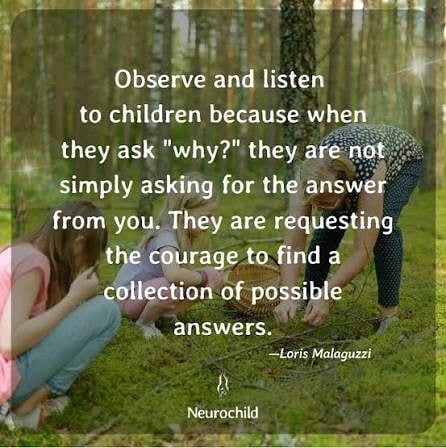
Listening to Hear
Are we really listening?
Are we really listening when a child is telling us something, or are our minds tuned into the many other thoughts racing through our heads at any one time?
Listening to hear can be one of the most difficult things we do, particularly when a child is tumbling words out as though there is no tomorrow, racing from one subject to another.
There are certainly times when we can multitask while a child enthusiastically shares a story that has little ongoing significance. Those conversations have their place too. However, what requires our discernment is recognising the subtle shift in tone, the moment of hesitation, or the pause that signals a child has something important to say but is unsure how to say it.
It is these nuances that matter most. They are easily missed when our own minds and schedules are full, yet they are often where the child's deepest thoughts and feelings are found.
Listening beyond words
Listening to hear is different from listening to respond or even listening to assess. It is a subtle but profound distinction, and one that has always sat at the heart of my practice.
When children are seriously unwell, they often communicate in ways that require us to pay attention beyond words. A child may tell us they are "fine," while their play, posture, withdrawal, or questions reveal something entirely different. Other children communicate through silence, artwork, humour, or changes in behaviour.
Listening, then, becomes an act of curiosity, presence, and relationship rather than simply gathering information.
When a child feels unheard
One child living with cancer once told me:
"Mum doesn't really want to listen anyway because she has already made up her mind."
She was expressing a profound sense of powerlessness while trying to make sense of an overwhelming situation through the eyes of a twelve-year-old. She had attempted to tell others how she was feeling, but her limited ability to articulate those emotions, combined with the busyness and emotional strain within her family, meant she wasn't easily understood.
There was no intention on her mother's part to dismiss or overlook her daughter's feelings. Serious illness creates chaos within a family, stretching everyone emotionally and physically. It takes energy and intentionality to slow the pace enough to truly hear a child's plea to be understood.
What children notice
Professor Myra Bluebond-Langner, an anthropologist and leading researcher in paediatric palliative care, reminds us that children see, sense, notice, and make meaning from what they observe, both within themselves and around them. Depending on their developmental stage, children interpret the behaviours, emotions, and responses of those caring for them.
When parents appear overwhelmed or too busy, some children decide not to voice what they are truly thinking. They may worry about burdening their parents, believe they will not be heard, or simply want to protect those they love.
In Myra's work with children living with life-limiting illnesses, she found that when children were included in honest conversations, their anxiety decreased. Trust increased. Fear softened. Children who were told the truth were often calmer than those left guessing.
Her words continue to resonate deeply with me:
"Children do not need protection from truth. They need protection from being alone with it. And sometimes, the bravest medicine is not another treatment. It is listening."
Listening requires presence
Throughout my years of caring for children with serious illnesses, I was privileged to spend time simply listening. It was both my role and my focus.
Yet I find the greatest reminder comes not in clinical settings, but in the everyday moments of listening to our own children and grandchildren. These ordinary conversations require patience, discernment, and emotional energy.
Children love being seen, heard, and understood, as do all of us.
Over the years I have deliberately trained myself to notice the nuances: changes in tone, the pace of speech, what is being said, and perhaps even more importantly, what is not being said.
I certainly do not get it right every time. However, awareness is the first step towards truly listening.
Recognising the moment
Learning to separate everyday chatter from moments of deeper significance is both an art and a skill.
How many times have we looked up to find a child quietly watching us? In those moments, I have often found myself mentally retracing the conversation, wondering what I may have missed.
Children are constantly reading the people around them, trying to understand whether it is safe to say what is on their minds.
I often use the analogy of a game of table tennis when talking with health professionals. Conversation with a child is much the same. There are moments when the ball is simply moving back and forth in casual conversation. Then, almost imperceptibly, the ball leaves the table. Something important has just been revealed.
The challenge is recognising when that shift has occurred.
Sometimes it is nothing more than a slight change in tone, a pause, or a different pitch in the child's voice. Those subtle moments often deserve our greatest attention.
What the evidence tells us
Lambert and colleagues (2021), in a scoping review synthesising findings from 99 studies, explored children's experiences with healthcare professionals.
Children consistently reported feeling most supported when adults:
listened carefully
shared information in ways they could understand
involved them in conversations about their care
recognised them as whole people, not simply as someone with an illness.
While this may seem obvious, it is not every child's experience.
Many children describe feeling distressed when adults talk about them rather than with them. Being fully present, listening for meaning, and responding to what has truly been heard are fundamental to building trusting relationships with children and young people.
A lifelong commitment
I can still remember moments from my own childhood when I felt dismissed, unheard, or misunderstood. Those experiences have stayed with me.
Perhaps that is one reason I feel so compelled to do my very best whenever I am alongside a child. My hope is to never leave lasting impressions for the wrong reasons.
I will continue to advocate strongly for children's voices to be heard and understood, particularly when those children are vulnerable. Raising awareness and bringing children's perspectives into focus will always remain central to my work.
We will not always get it right. We are human.
But approaching children with genuine intent, slowing ourselves enough to notice the subtle changes, and becoming more aware of the moments that truly matter is a meaningful first step towards listening to hear.
"The heart of a child is like a garden. If you want it to bloom, you must water it with listening."
— Anonymous

